Sleep Reset: 7-Day Guided Audio for Deeper Sleep
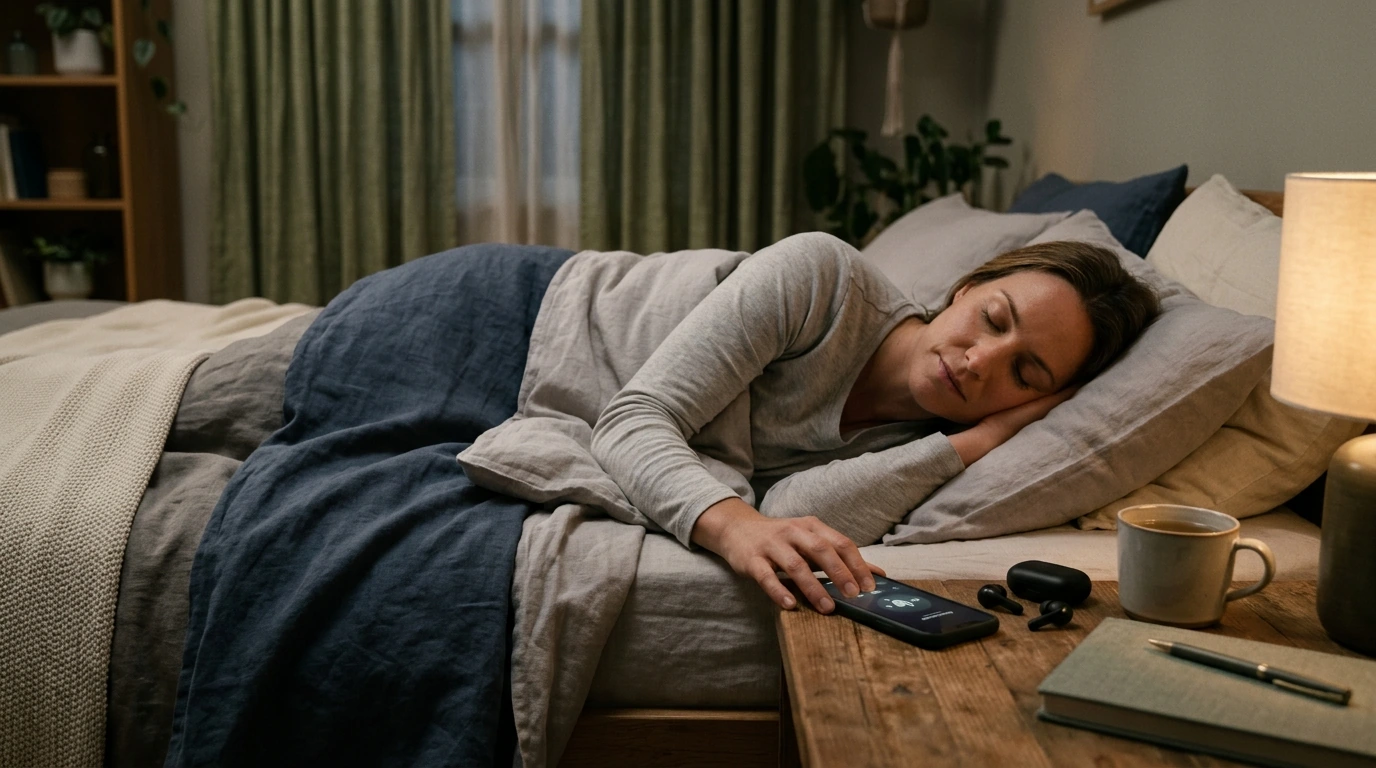
Sleep Reset: A 7-Day Guided Audio Plan for Restful Nights
Rest can feel out of reach when the mind won’t switch off, the body stays tense, or sleep arrives in fragments. A short, structured audio routine can help rebuild a calmer bedtime rhythm by pairing relaxation cues with a simple nightly schedule. Sleep Reset is a 7-day guided audio course designed to ease into deeper relaxation and support more consistent nights.
What Sleep Reset Is and Who It’s For
Sleep Reset is a guided audio course built around a 7-day sequence designed for bedtime or wind-down time. Each session is meant to be simple: press play, follow the cues, and let your body do the rest.
- Helpful for racing thoughts, bedtime anxiety, restlessness, or frequent wake-ups.
- Useful for anyone who wants a repeatable evening routine that reduces stimulation and encourages relaxation.
- Works best when paired with basic sleep hygiene—steady sleep/wake timing, dimmer evenings, and fewer late stimulants.
If you prefer a guided voice (instead of music alone), Sleep Reset: Guided Audio Course for Restful Nights is designed to provide that step-by-step structure without making bedtime feel like another task to “get right.”
How Guided Sleep Audio Supports Relaxation
Guided audio helps by giving attention a gentle “home base.” Instead of replaying the day, the mind has something neutral to track—breathing pace, body scan cues, and a steady voice cadence.
- Anchors attention: Voice prompts and paced breathing can reduce rumination and mental replay.
- Releases tension: Body scans and progressive relaxation can soften muscle tightness that often masquerades as “not tired.”
- Builds predictability: A consistent nightly ritual can teach the brain to associate the routine with winding down.
- Helps after wake-ups: Gentle imagery and soothing cadence may lower perceived stress, making it easier to drift back to sleep.
For more on foundational sleep habits, the NHLBI overview is a practical reference: Healthy Sleep Habits (NHLBI).
The 7-Day Reset Rhythm (What to Do Each Night)
The goal of the week isn’t perfect sleep—it’s a steadier pattern. Think “repeatable” rather than “optimal.”
- Night 1–2: Keep it simple. Use the audio as the only assignment and aim for a consistent start time.
- Night 3–4: Add an off-ramp from the day. Dim lights 30–60 minutes before bed and skip emotionally activating content.
- Night 5–6: Strengthen the cue. Repeat the same small pre-sleep steps (tea, shower, stretch, short journal) before pressing play.
- Night 7: Review what helped. Identify the most effective elements—breathing pace, body scan, imagery—and plan to repeat them.
A Simple Nightly Routine to Pair With Guided Audio
| Time | Action | Purpose |
|---|---|---|
| 60–30 min before bed | Lower lights, put phone on Do Not Disturb | Reduce stimulation and signal wind-down |
| 20 min before bed | Brief stretch or warm shower | Release physical tension |
| At bedtime | Start the guided audio, focus on slow exhale | Settle the mind and relax the body |
| If awake at night | Restart a calm segment or use slow breathing | Reduce frustration and ease back toward sleep |
Deep Relaxation Techniques Commonly Used in Sleep Meditations
Sleep meditations tend to reuse a few proven, low-effort techniques. The best ones feel almost boring—in a good way—because they avoid surprises.
- Paced breathing: Slightly longer exhales can encourage a calmer physiological state.
- Body scan: Moving attention head-to-toe helps locate and soften tension.
- Progressive muscle relaxation: Gentle tighten-and-release can be especially effective for restlessness.
- Guided imagery: Neutral, soothing scenes can reduce mental noise without demanding effort.
- Non-judgment cues: Prompts to “notice and let go” reduce pressure to fall asleep quickly.
When sleep struggles become persistent, it helps to understand what’s typical and what’s not. The American Academy of Sleep Medicine provides a clear overview here: Insomnia (AASM).
Getting Better Results Without Overthinking It
The biggest improvements usually come from consistency, not intensity. A calmer night is often the byproduct of removing friction and reducing self-pressure.
- Use the audio at the same time each night for at least a week to build predictability.
- Keep volume low—soothing but clear. Too loud can keep attention alert.
- If the mind wanders, return to the next cue without self-criticism. Effort can increase arousal.
- If sleep doesn’t arrive quickly, treat the session as recovery time rather than a performance test.
- Track two simple measures: bedtime consistency and morning energy (not just total hours).
If you like using brief journaling to “download” thoughts before bed, a structured printable can make it faster and less emotional. Memory Boost Worksheets for Students & Adults can also double as a low-stimulation way to organize thoughts earlier in the evening so bedtime stays lighter.
Sleep Reset: What’s Included
- A 7-day guided audio course designed for bedtime relaxation and more consistent nights.
- Easy to follow: press play, follow prompts, and repeat nightly.
- A practical option for people who prefer guided voice cues over looping soundtracks alone.
View the full details and access options here: Sleep Reset: Guided Audio Course for Restful Nights – 7-Day Sleep Meditation, Deep Relaxation, Insomnia Relief.
When to Seek Extra Support
Guided audio can be a strong support tool, but it isn’t a substitute for medical care when symptoms are persistent or severe.
The National Institute of Neurological Disorders and Stroke offers an accessible overview of insomnia and when to get help: Insomnia (NINDS).
FAQ
What is the best deep sleep music for insomnia?
There isn’t one universal “best.” Many people do well with steady, low-variation audio that avoids sudden changes; if racing thoughts are the main issue, guided sleep audio can work better than music alone because it adds breathing and relaxation cues to follow.












Leave a comment