New Kitten Feeding Guide: Portions, Schedule & Food Tips
Feeding Your New Kitten Right: Simple Nutrition Steps for Healthy Growth and Happy Mealtimes
A new kitten grows fast, and good nutrition early on supports steady weight gain, strong bones, a healthy coat, and predictable litter box habits. The first weeks at home are also when lifelong food preferences form, so a calm routine and the right diet setup matters as much as the brand on the bag. Use the guide below to choose an age-appropriate food, set portions and meal timing, transition safely, and avoid common feeding mistakes.
What makes kitten nutrition different from adult cat food
Kittens aren’t just “small cats.” They need more calories per pound to fuel rapid growth, learning, and play. A growth-stage diet also needs higher-quality protein and the right amino acids—especially taurine, which supports heart health and vision. Fat is another key energy source and helps keep skin and coats healthy, so many kittens do best with a higher fat profile than adult cats.
Minerals matter more during kittenhood, too. Calcium and phosphorus must be present in the right balance to support bone development; extremes or imbalances can cause problems that are harder to fix later. As a baseline, choose a food labeled complete and balanced for “growth” or “all life stages” per AAFCO/FEDIAF standards, and stick with it consistently while you monitor your kitten’s body condition.
What food to start a new kitten on (by age and situation)
If you can, begin with the same food your kitten ate before adoption for the first 3–7 days. The move itself is stressful, and changing diet at the same time is a common reason for loose stool. Once your kitten is settled, you can decide whether to stay with that food or transition.
Age-based starting points
- 8–12 weeks: Prioritize a complete kitten formula. Many kittens accept smaller kibble or soft textures more easily at this stage.
- 3–6 months: Continue kitten food. Appetite often ramps up during growth spurts and as activity increases.
- 6–12 months: Most kittens still benefit from kitten food unless your veterinarian recommends otherwise (for example, for specific medical needs).
Wet food can support hydration and may be easier to chew; dry food is convenient and calorie-dense. Many homes use a mix (for example, wet meals plus a measured dry meal). Avoid homemade or raw diets unless they’re formulated with a veterinary nutritionist—growth-stage nutrient gaps are common and can be serious.
Feeding schedule and portions that prevent overeating (and constant begging)
Young kittens do best with multiple small meals. A predictable schedule also helps you notice early changes in appetite that can signal stress or illness.
- Aim for 3–4 meals/day for young kittens (up to about 4–5 months), then 2–3 meals/day as they mature.
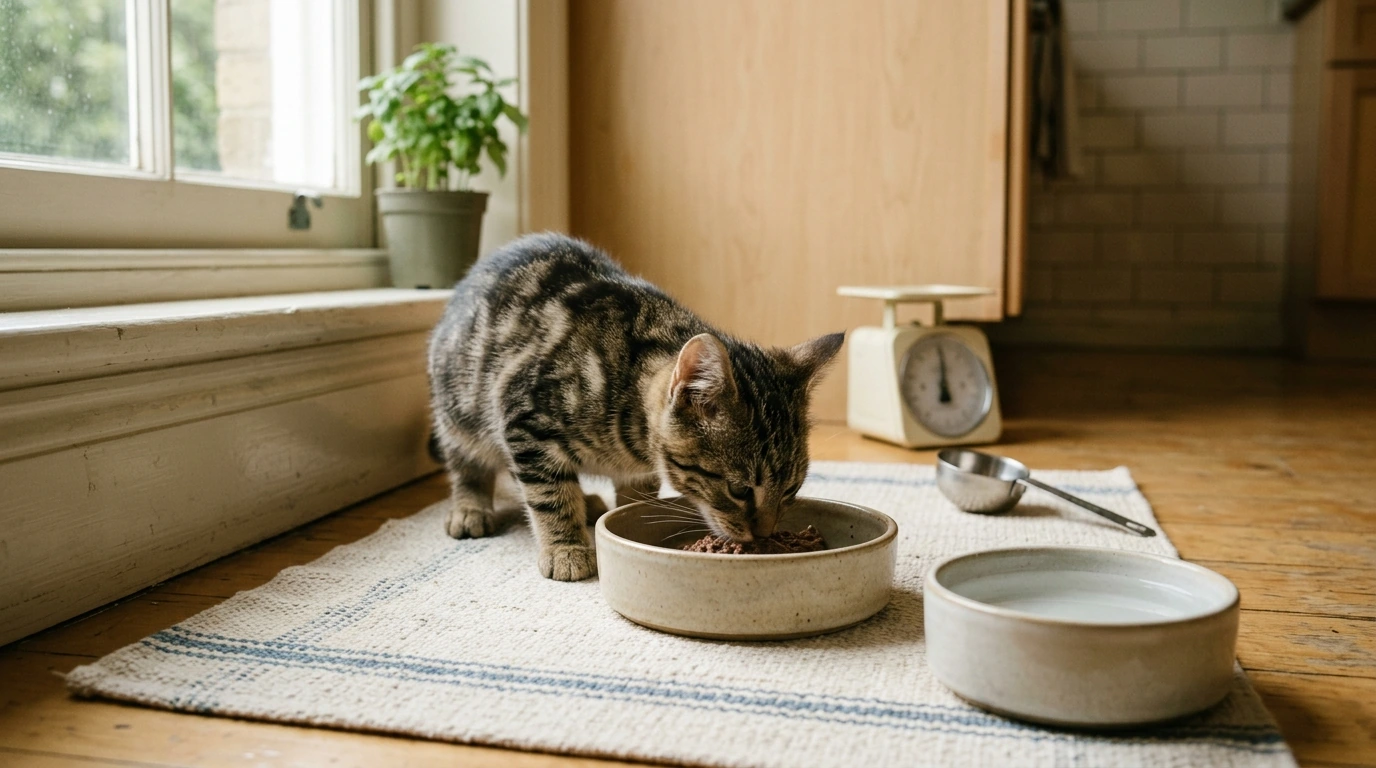
- Measure food with a kitchen scale or a consistent measuring cup; “eye-balling” portions can quickly lead to overfeeding.
- Use the package feeding guide as a starting point, then adjust based on body condition and growth trend.
- A healthy kitten typically has a visible waist from above, and ribs that are easy to feel but not sticking out.
- Keep treats to a small part of daily intake and save them for training, nail trims, and carrier practice.
- Fresh water should always be available; some kittens drink more from a fountain.
| Kitten age | Meals per day | Texture focus | Notes to watch |
|---|---|---|---|
| 8–12 weeks | 4 | Mostly wet or softened kibble | Loose stool can happen during transitions; keep changes gradual |
| 3–5 months | 3–4 | Wet + dry mix works well | Growth spurts may increase appetite; adjust portions slowly |
| 6–12 months | 2–3 | Any complete kitten diet | Watch body condition; reduce “free-feeding” if weight climbs |
How to transition foods without stomach upset
Common feeding mistakes and safer alternatives
Making mealtimes calm: bowls, placement, and routine
A practical checklist for the first two weeks at home
Extra guidance for first-time kitten parents
A deeper, step-by-step plan for confident feeding decisions
If you want a more structured system—label-reading help, portioning examples, and troubleshooting for common “new kitten” situations—see Feeding Your New Kitten Right (Essential Kitten Nutrition eBook). It’s designed for busy households that want a simple routine without second-guessing every meal.
For a calmer first week overall (especially if nighttime rest is tough), some new pet parents also like adding a wind-down routine for themselves with Sleep Reset: Guided Audio Course for Restful Nights or keeping quick training notes and schedules in one place using Memory Boost Worksheets for Students & Adults.
Helpful veterinary nutrition resources
For additional guidance on balanced feeding and safe routines, review these reputable references: Cornell University College of Veterinary Medicine — Feeding Your Cat, the WSAVA Global Nutrition Guidelines, and AAHA resources.
FAQ
Should a new kitten eat wet food, dry food, or both?
Either can work as long as the food is complete and balanced for growth. Many kittens do well with a mix—wet food for hydration and palatability, plus measured dry food for convenience—while you monitor stool quality and weight.
How often should a kitten be fed each day?
Very young kittens typically do best with 4 meals per day, then 3–4 meals as they grow, and 2–3 meals from about 6 months onward. Adjust portions based on body condition and growth trends rather than sticking rigidly to a single number.
How do you switch kitten foods without diarrhea?
Transition over 7–10 days by gradually increasing the new food (75/25, 50/50, 25/75, then 100%). If vomiting or diarrhea occurs, pause or revert to the previous ratio, and contact a veterinarian for persistent symptoms, blood in stool, lethargy, or dehydration signs.










Leave a comment